

Previous Article
News
Research note
By Ioan Durnescu
Co-producing Desistance is a research project examining the use of social co-operative structures of employment as a mechanism for supporting the resettlement of prisoners and enabling longer term processes of desistance. This project is run by Beth Weaver at the University of Strathclyde and will run from January 2015-2018. Across the UK, and indeed further afield, increasing political, professional and public concern has been expressed about the economic, social and human costs of the increasing use of imprisonment and of reoffending following release. Consequently, there is now growing interest in developing innovative and sustainable practices that can facilitate the social integration and desistance of former prisoners. Research on why and how people stop offending (desistance) has incrementally refocused attention on the kinds of conditions and supports that variously enable or constrain social integration and desistance. However, despite the identified correlations between participation in employment and desistance, this is an area that has received limited attention in policy, practice and research. Responding to this gap in research, policy and practice, this study will examine the potential of a recent innovation in the use of social cooperatives in the UK. In particular, this research uses case studies of more established through-the-prison-gate social cooperatives in Italy to inform emerging cooperative structures of employment in the criminal justice system in the UK in order to consider what social cooperatives might contribute to the integration and desistance of former prisoners; to consider how this learning can translate into improvements for policy design and service delivery in a criminal justice context; and crucially, to inform new ways of working to support social integration and desistance.

Related News
Keep up to date with the latest developments, stories, and updates on probation from across Europe and beyond. Find relevant news and insights shaping the field today.
New

Electronic monitoring
Electronic Monitoring in Europe: Insights from the 13th Electronic Monitoring conference Questionnaire
30/03/2026
The 13th Electronic Monitoring (EM) conference Questionnaire has now been released, offering a comprehensive overview of how EM is applied across Europe today.ion.
New
CEP members
New CEP member: Guernsey Probation Service
25/03/2026
In recent weeks, CEP has interviewed individual members and representatives of the new member organisations that joined CEP at the beginning of 2026. In these interviews, the new member organisations or individual members will share information on why they decided to become members, how they would like to contribute to the development of CEP and many more.
Enjoy reading!
Recap

Probation outside Europe
Recap: CEP and APPA webinar
25/03/2026
Confederation of European Probation (CEP) and American Probation and Parole Association (APPA) hosted the second joint webinar on 24 March 2026, this time on “Integrity of Performance: Ensuring Meaningful and Ethical Outcomes”.
The overarching theme of integrity of performance was explored through two distinct perspectives on this fundamental concept.
Recap
Communication and Awareness-Raising
Recap: Opening Doors to Second Chances: The Mission and Impact of Yellow Ribbon Run
25/03/2026
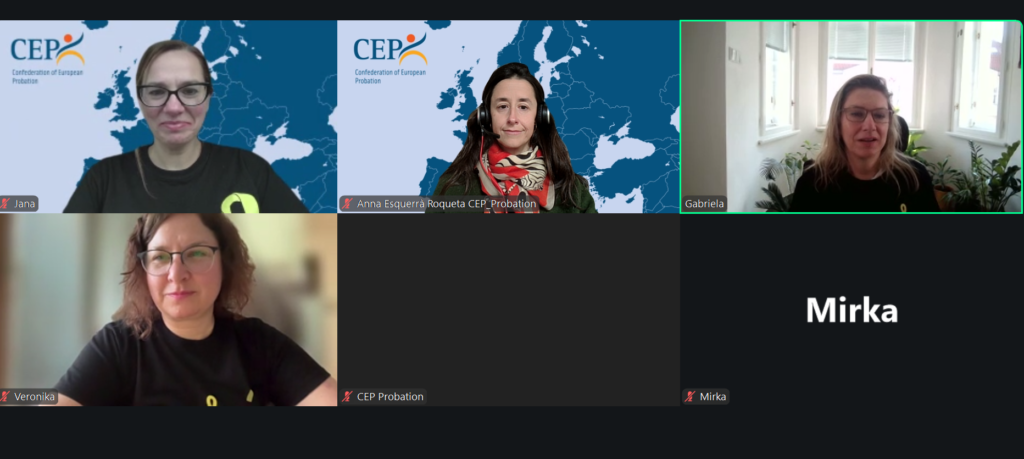
On Thursday 19 March, CEP hosted the second webinar of 2026 on the topic of Alternatives to Detention. The session led by Dr. Gabriela Slovakova from the Czech Probation and Mediation Service titled „Opening Doors to Second Chances: The Mission and Impact of Yellow Ribbon Run“ introduced the Yellow Ribbon project with a powerful message of second chances and fair opportunities.
New
CEP Board
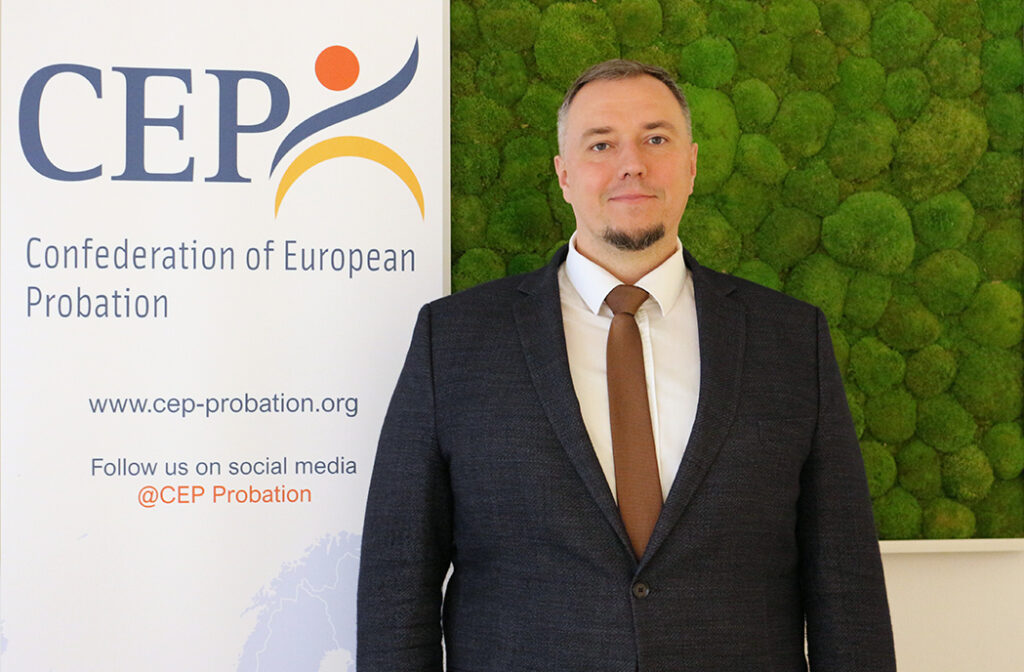
Interview with new CEP board member Žilvinas Miliauskas
17/03/2026
During the General Assembly in Austria, a new CEP Board got elected for the upcoming three years. In the coming weeks we will publish interviews with all newly-elected board members where they will share information on their professional background, how they would like to contribute, what challenges lie ahead and many more.
Enjoy reading!
Recap

Violent Extremism
Recap: Expert Group meeting on Violent Extremism
16/03/2026
On 12–13 March 2026, the Expert Group on Violent Extremism convened for an in‑person meeting in Bucharest, Romania. Hosted at the University of Bucharest, the meeting brought together practitioners and representatives from across Europe to finalise the overview of best practices for preventive interventions targeting juveniles and young adults up to the age of 26 under probation. Building on the extensive discussions and progress made in 2025, the group worked collaboratively to bring the document to completion.
Subscribe to our bi-monthly email newsletter!
"*" indicates required fields
- Keep up to date with important probation developments and insights.